Key output
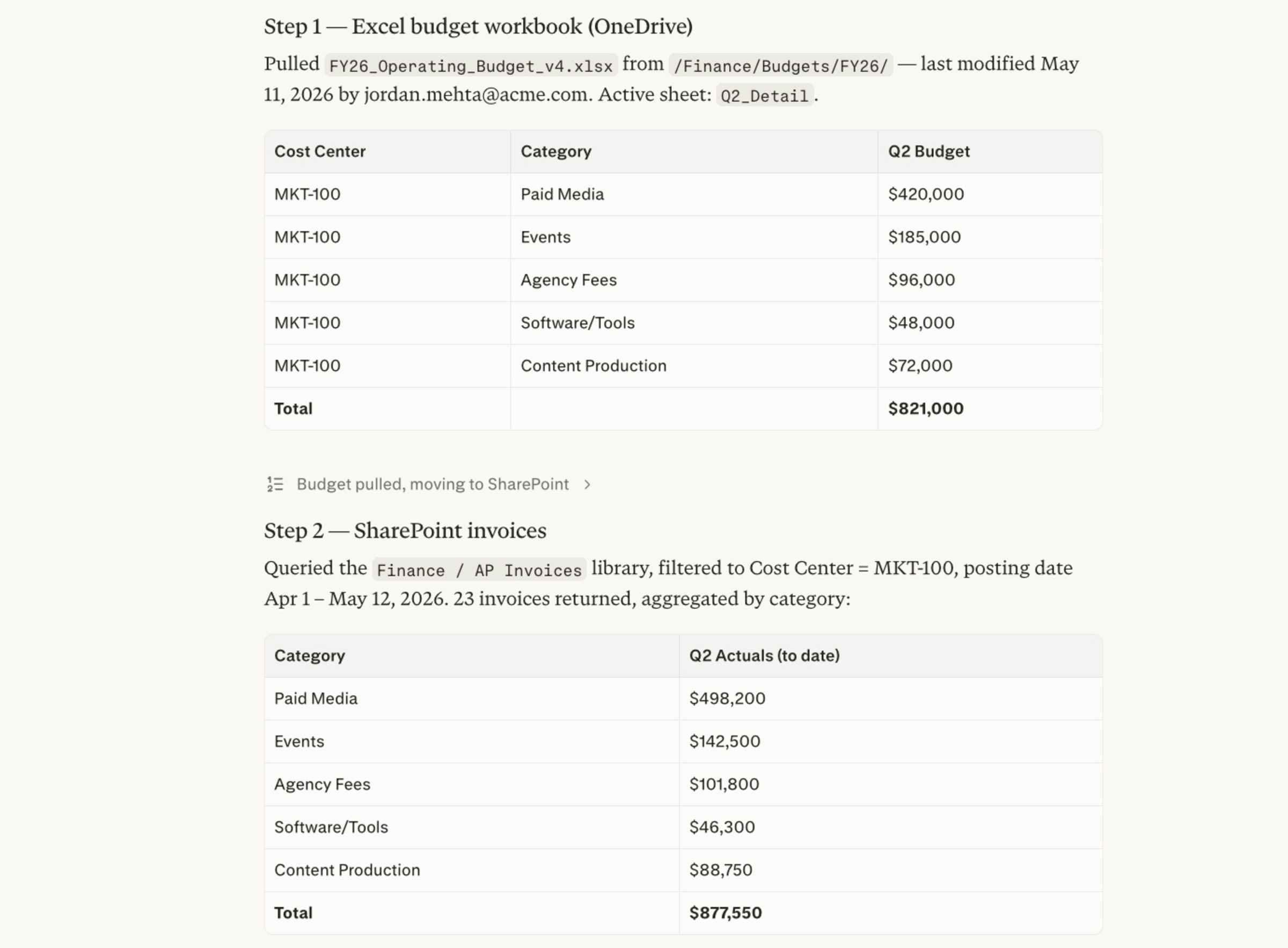
Computer produces a reconciled view of budget versus actuals by pulling the latest budget workbook from Excel and matching it against current invoices in SharePoint, so finance and operations leaders can see where spend is tracking cleanly and where it has drifted. It flags material variances at the line-item or category level, quantifying how far each is over or under budget and surfacing any missing or inconsistent items that may reflect timing issues, mis-coding, or errors.
From there, Computer writes a concise narrative summary and pushes it into a Microsoft Teams channel, distilling the numbers into a few sentences about where attention is needed this period. That summary is accompanied by a simple table of the largest variances, giving executives and budget owners a quick, in-context snapshot they can react to without opening spreadsheets or digging through SharePoint directories.

Key tips
Keep your budget workbook and invoice folders structured and consistently named so Computer can reliably locate the “latest” files in Excel and SharePoint without confusion.
Define what “material variance” means for your team (for example, a fixed dollar threshold, a percentage threshold, or separate rules for different categories) and include that in your instructions so Computer focuses the summary on the gaps that truly matter.
Use the Teams summary as a starting point for a monthly or weekly ritual—reply in-thread with questions or adjustments, then refine the instructions over time so Computer learns which variances to ignore, which to escalate, and how to format the output for your leadership audience.