Key output
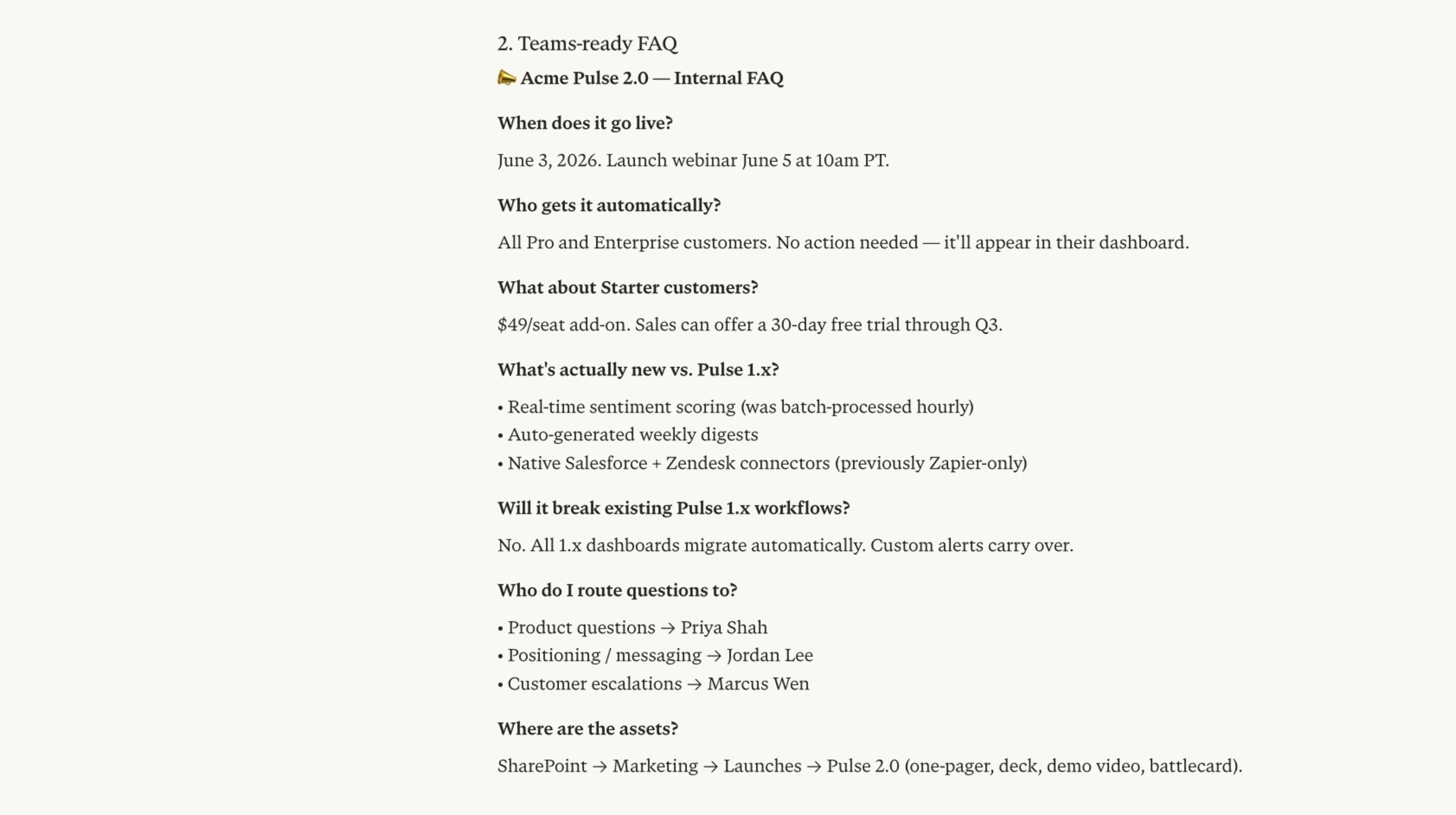
Computer produces a clear launch communications plan that maps your audiences, messages, channels, and timing into one view, so you can see what gets sent when and to whom across email, web, social, and internal enablement. It also generates an internal one-page launch brief that explains what you’re launching, why it matters, who it’s for, and how success will be measured, ready to send to leaders, sales, and support for alignment.
From there, Computer drafts concrete external-facing assets: an announcement email (and optional follow-up) with subject lines, body copy, and calls to action; a landing page outline with suggested sections, headline ideas, proof points, and CTAs; and a set of social posts tailored to your chosen platforms so you don’t start from a blank page for each channel. Finally, it recommends a simple folder hierarchy and file naming pattern that your team can adopt, making it easier to review, edit, and collaborate on everything in one place.

Key tips
Focus your brief on real audiences, constraints, and examples: name your primary personas, the channels you actually use, and share links or snippets of past launches or brand guidelines so Computer can mirror your tone and structure.
List non-negotiables up front: legal or compliance constraints, regions, SKUs, pricing rules, and claims that require proof—so Computer doesn’t overstate or invent details, and so you can see exactly where human review is needed before anything goes live.
When you see a section that’s especially close to what you want (for example, the email or the landing page outline), ask Computer to treat that as the source of truth and regenerate other assets to match it, rather than rebuilding the entire flow from scratch.