Key Output
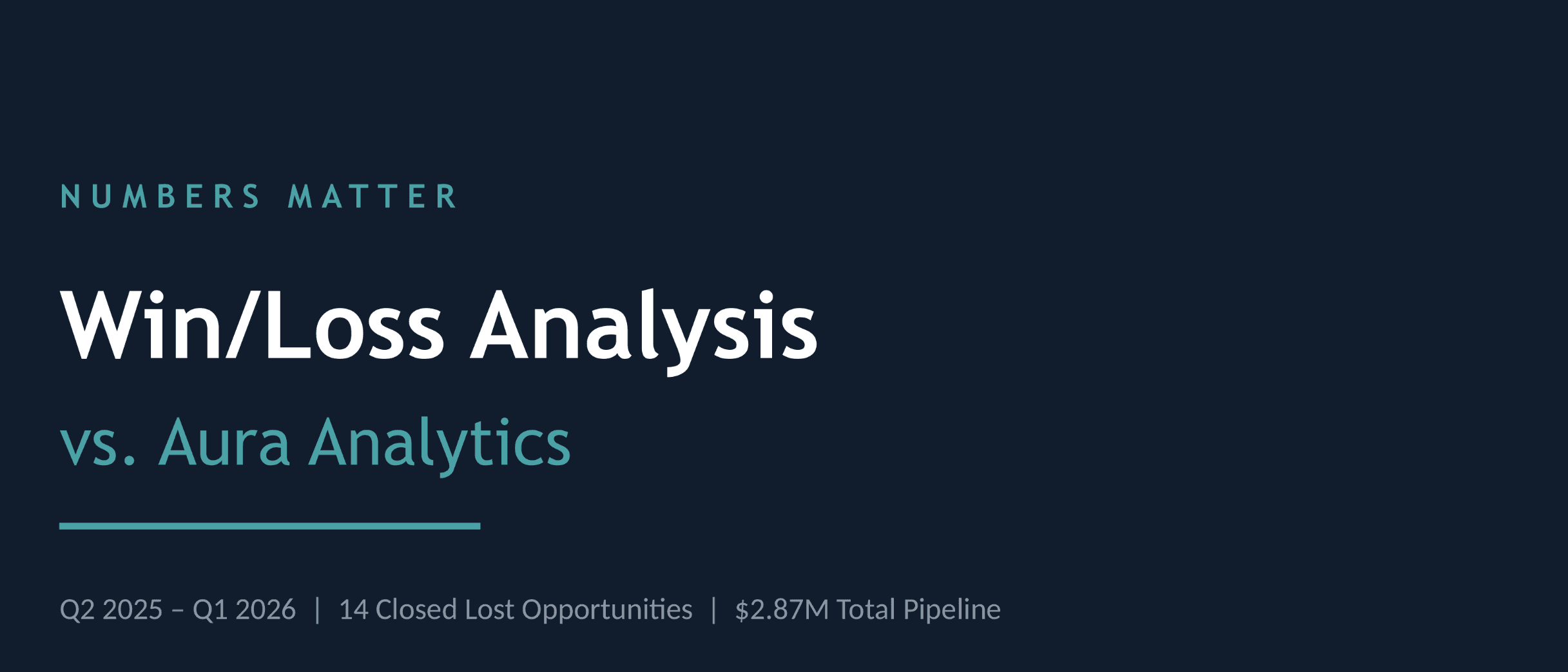
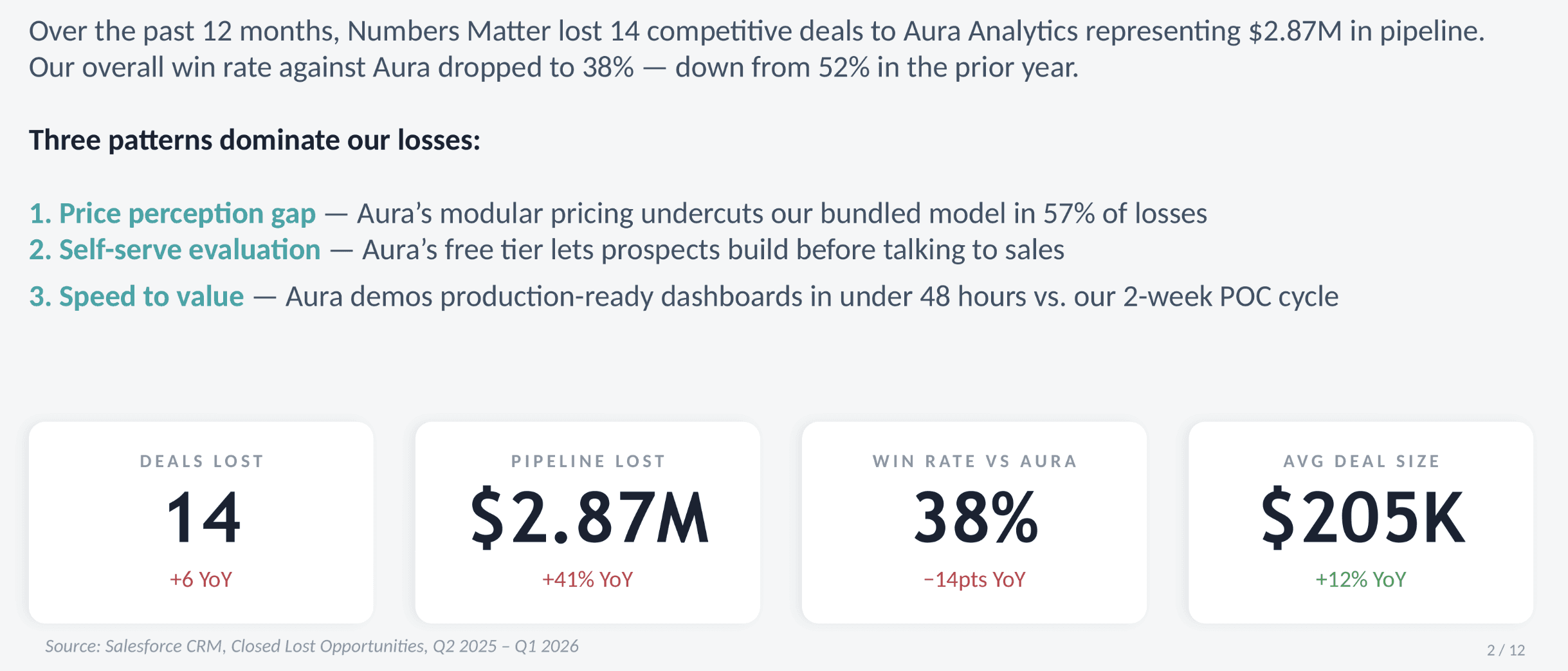
Computer produces an executive presentation that explains how often a team loses to a competitor, where those losses are concentrated, and which themes appear most often in closed-lost data and rep notes. The deck typically includes trend charts for loss rate over time, breakdowns by segment or industry, common loss reasons, stage-by-stage conversion analysis, and rep- or region-level views to isolate whether the issue is market-specific or process-specific.
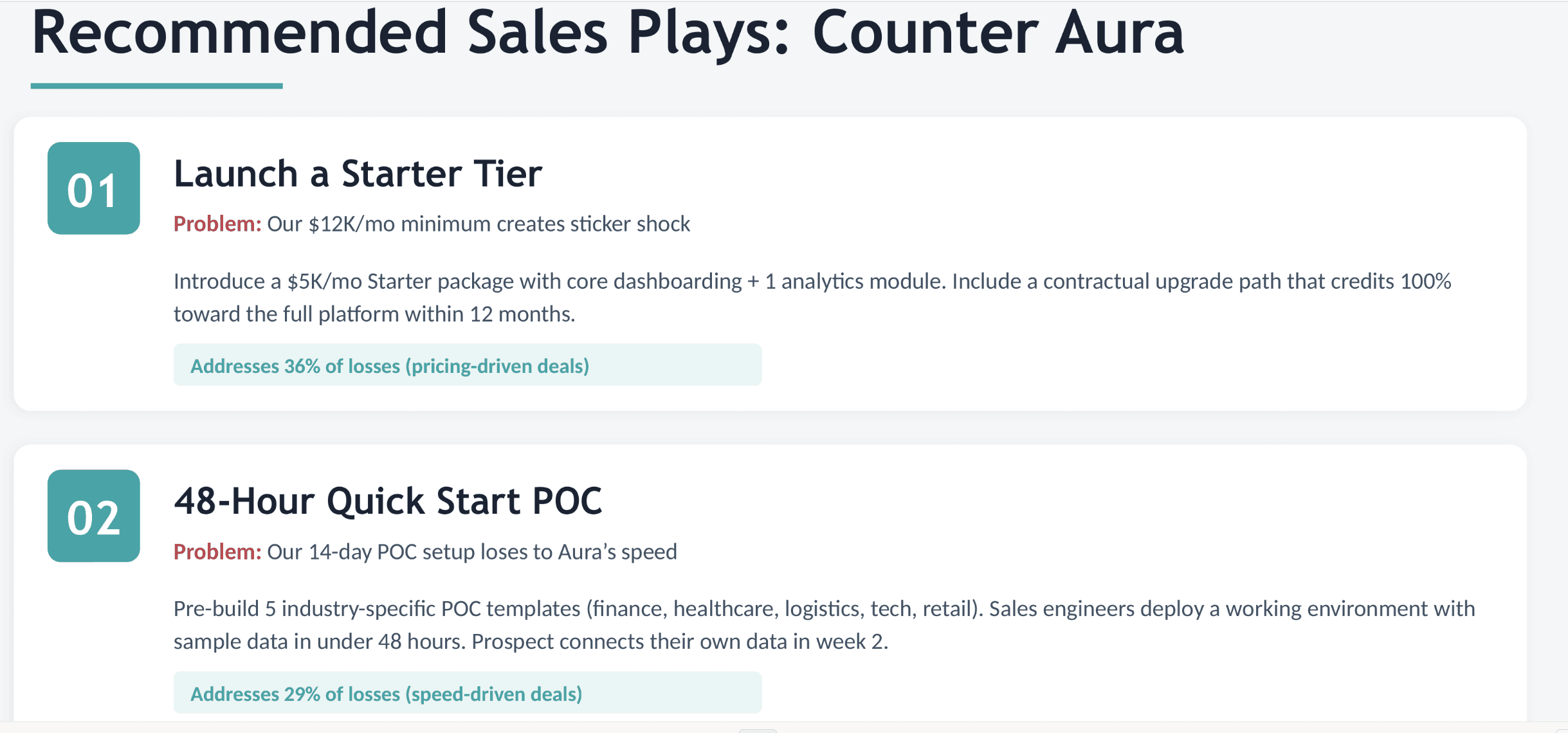
It also translates the analysis into concrete sales play improvements, such as updated discovery questions, pricing objection responses, competitor-specific talk tracks, qualification changes, and enablement priorities for managers and reps. Rather than stopping at reporting, the presentation frames the findings as an action plan your team can use to improve competitive win rates in future Aura Analytics deals.
Tips
Capture competitor and loss reason cleanly: The best analysis depends on structured Salesforce fields for competitor, closed-lost reason, and rep notes; weak CRM hygiene leads to weaker conclusions.
Measure both count and revenue: A competitor may beat you often by deal count, by dollar value, or both, and those patterns can point to different fixes in your sales motion.
Ask for buyer-facing output too: After the deck, follow up with “turn this into a Brex battlecard” or “draft new objection-handling guidance for reps” so the findings become usable enablement assets.