Upgraded deep research, Model Council, and a simplified input bar

Upgraded deep research
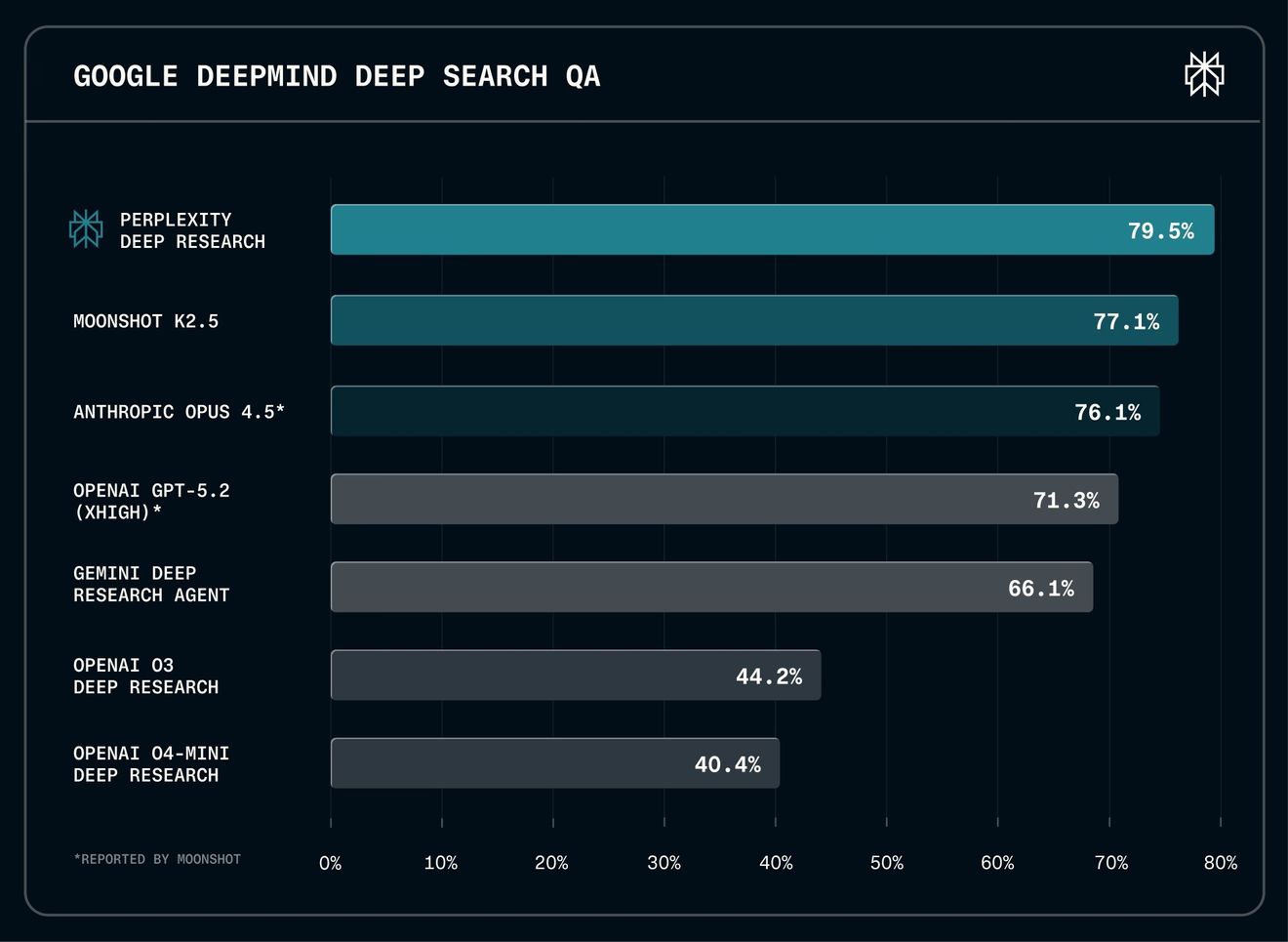
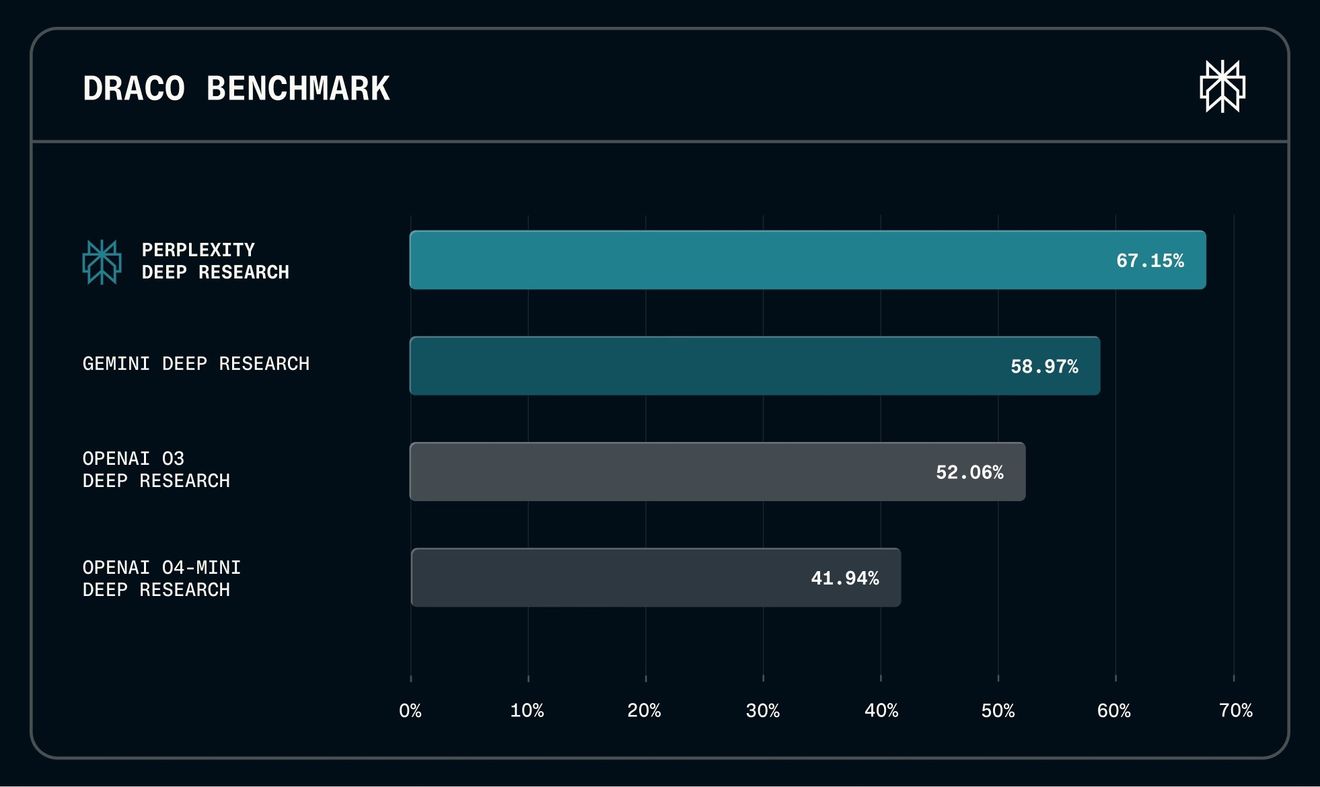
We've upgraded deep research to achieve state-of-the-art performance on leading external benchmarks (such as Google DeepMind Deep Search QA and Scale AI Research Rubric), outperforming other deep research tools on accuracy and reliability. This upgrade pairs the best available models with Perplexity's proprietary search engine and Sandbox infrastructure, with deep research now running on Opus 4.5 for Max and Pro users (and we'll upgrade to top reasoning models as they become available). Now for Max users, and rolling out to Pro in the coming days.
Read more about how we optimised deep research for real-world use, or try it for yourself by using deep research to conduct:
- Academic research: How did Japanese woodblock prints influence the compositional techniques and colour palettes of French Impressionist painters (especially monet) between 1860-1890, and which specific artists showed the most direct stylistic borrowings?
- Tech deep dive: What methodologies do leading AI evaluation benchmarks like HLE, Browsecomp, and SimpleQA use to assess LLM capabilities, and what are their key limitations in predicting real-world production performance?
- Legal research: What are the legal requirements and procedural differences for obtaining a marriage licence across Canadian provinces, and how do prenuptial agreement enforceability standards vary between Quebec's civil law system and common law jurisdictions?
See more use cases in this shared Space.
Introducing Model Council
Model Council enables you to run three frontier models at once, compare outputs, and get a more accurate, higher‑confidence answer. It’s available now on web only for Perplexity Max subscribers, and you can read more about it in our blog post.
Model Council works by running your query through three selected AI models in parallel and comparing the responses. A separate model then reviews and synthesises the results, highlighting where they agree, disagree, and what each one found. You can view results side by side, get clear insight into the evidence and disagreements, and see what each model uniquely contributes to the final answer. It’s great for strategic analysis, such as:
- Investment research: Get balanced views on stocks, markets, or financial decisions where model bias could be costly.
- Complex decisions: Evaluate options for major purchases, career moves, or strategic choices with input from multiple reasoning approaches.
- Creative brainstorming: Surface ideas for gifts, travel plans, or content by drawing on different models' strengths.
- Verification: Cross-validate information when you need to be confident you're getting it right.
See more use cases in this shared Space.
Simplified input bar
Perplexity’s input bar has a new, streamlined look on web. In addition to a more focused experience for asking questions, the updated design provides:
- A “+” icon for easy access to uploading files, managing sources, and choosing modes
- A logo for each model to aid recognition
- The selected model name displayed in the input bar for visibility
Deep research, Model council, Create files and apps (previously known as Labs), and Learn step by step, are now all accessible using the + menu.
Step by step learning
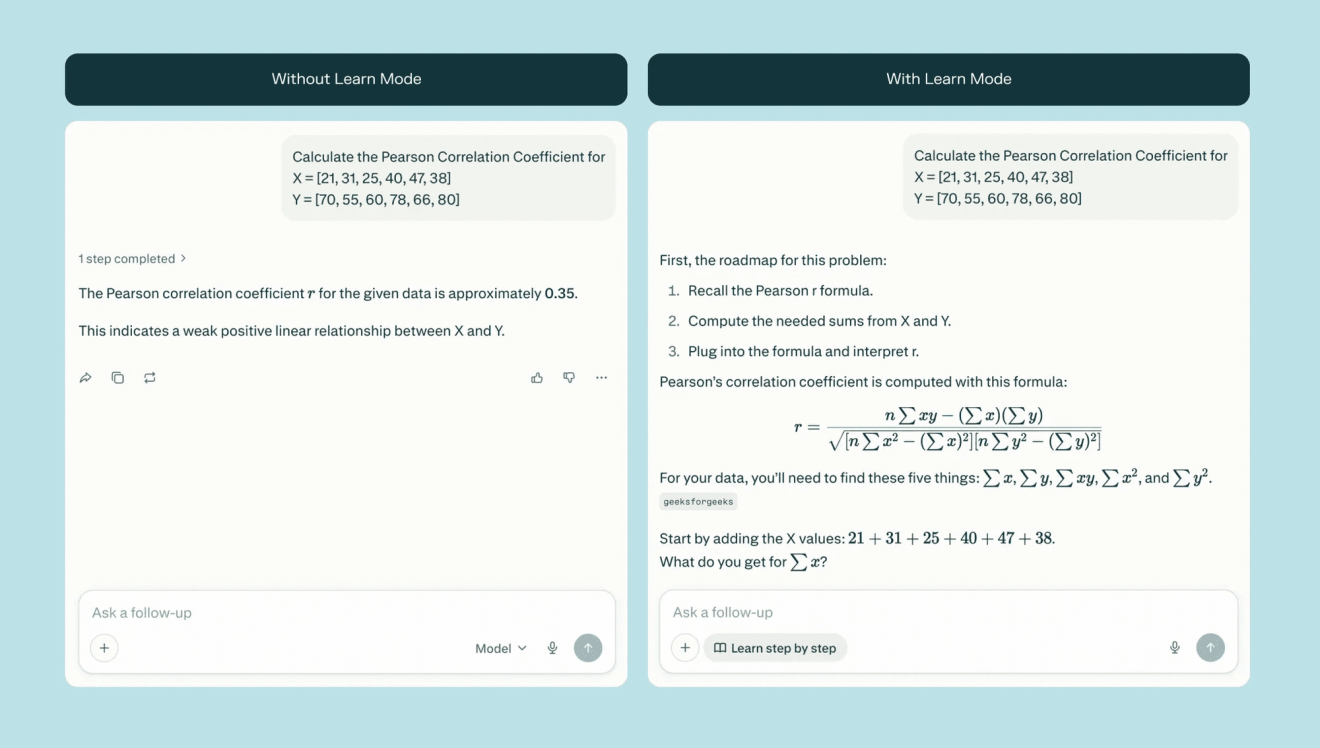
Learning mode is now available to everyone (not just students) via the “+” dropdown in Perplexity’s updated input bar on Web. When you select “Learn step by step”, answers provide an interactive education experience for any topic of interest, helping you:
- Understand topics step-by-step rather than get instant answers
- Understand and solve problems with guided questions and hints
- Get answers tailored to your level of knowledge
Improved memory engine
Perplexity now both creates richer memories and is more effective at recalling details from the past, now rolled out to Max and Pro users. Try it by asking for book recommendations or to recall details from a past conversation. Improvements include:
- Memory quality over quantity: Our tests found that the enhanced memory engine was able to recall important information in 95% of cases (up from 77% previously), while making half as many memories. In other words, it is much more effective at remembering the right things.
- Higher quality answers: As memory quality gets sharper, answer quality follows. We found the enhanced memory engine significantly improved dimensions such as understanding time and reasoning through approximations.
Heatmap on Perplexity Finance
The Perplexity Finance homepage now includes a heatmap view of price movement among top stocks. Hover your mouse over any company’s name to get a live-updating synthesis of why the price is up or down. Available on desktop, mobile apps, and mobile web.
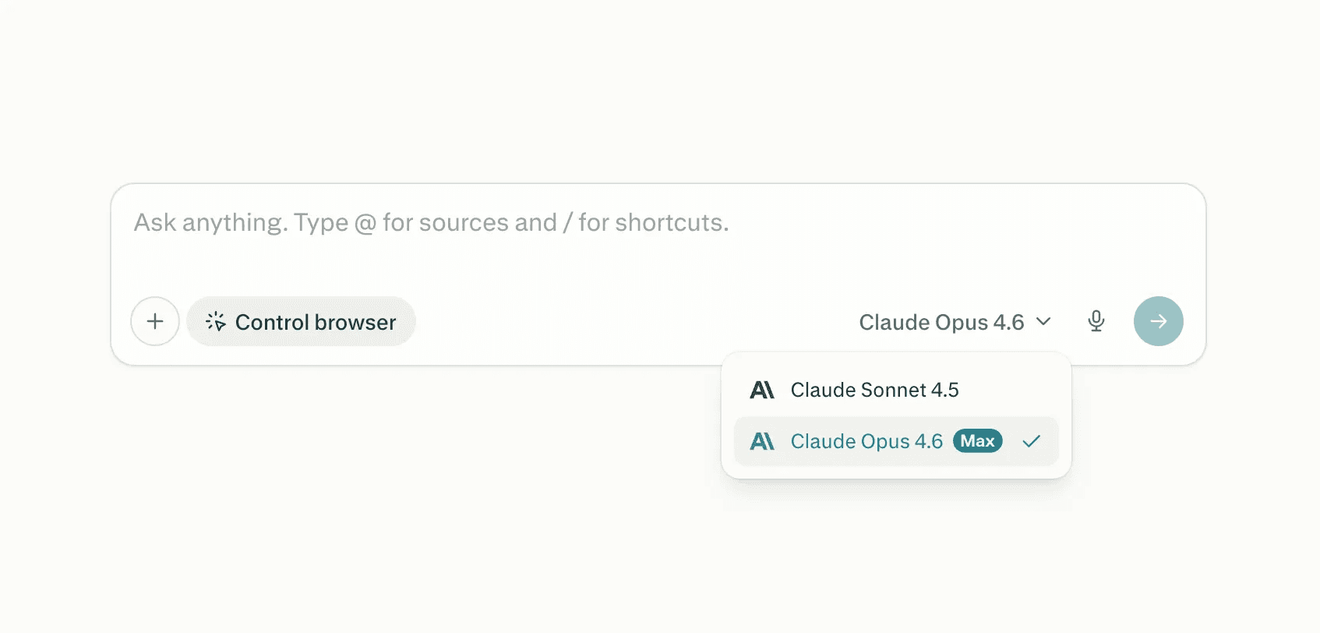
Comet Browser Agent now uses Opus 4.6
Max subscribers can now choose the model powering their browser agent, including Opus 4.6 (now the default model) and Sonnet 4.5. Opus 4.6 significantly increases Comet's reasoning ability, making the Comet Browser Agent great for complex tasks such as:
- Analysing complex data patterns on a web dashboard
- Investigating your GitHub commit history and evaluating patterns over time
- Walking through a competitor’s onboarding flow and assessing key differentiators and friction points
Expanded Enterprise security controls
Enterprise administrators can now further customise and secure the Perplexity Enterprise experience for their organisations:
- Granular feature access controls: Admins can configure access to specific features, including member access to the API, the visibility of the organisation-wide Spaces list, and which AI models are available to members.
- Expanded audit logs: Audit logs now include streamed Perplexity-generated answers (containing the answer itself, model/mode, sources), in addition to the queries submitted by the user.
- Domain-based sign-up restrictions: Admins can restrict new sign-ups to verified domains. When this setting is enabled in the Identity tab, only users with email addresses from verified domains can join the organisation.
- Organisation usage guidelines: Admins can share usage guidelines with all members, such as approved use cases and data input restrictions. These guidelines are set in the organisational profile and will appear on every member’s homepage.