Key Output
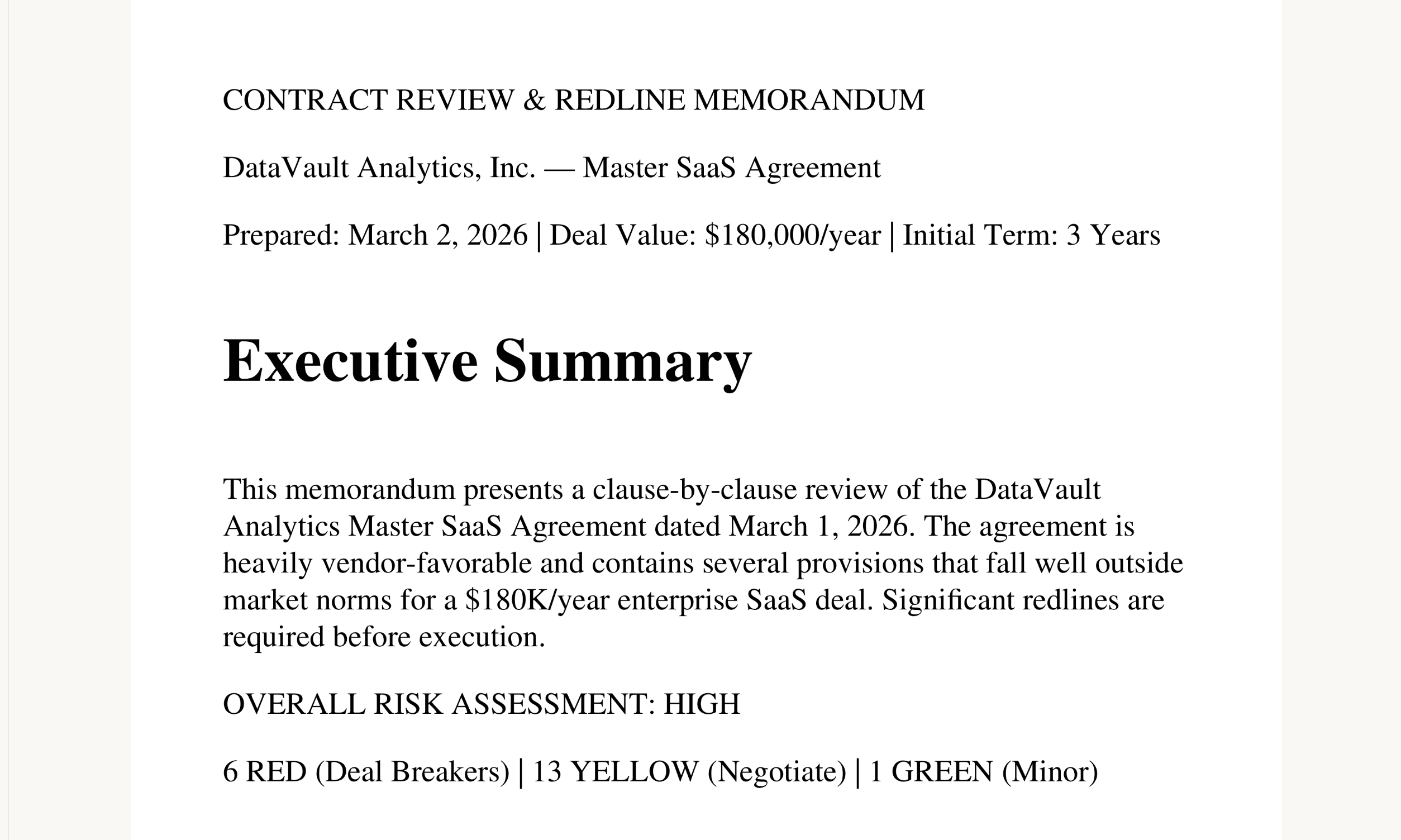
Computer analyzed the DataVault SaaS agreement and identified 21 issues across six deal‑breaking red flags, 13 yellow negotiation items, and two minor green improvements.
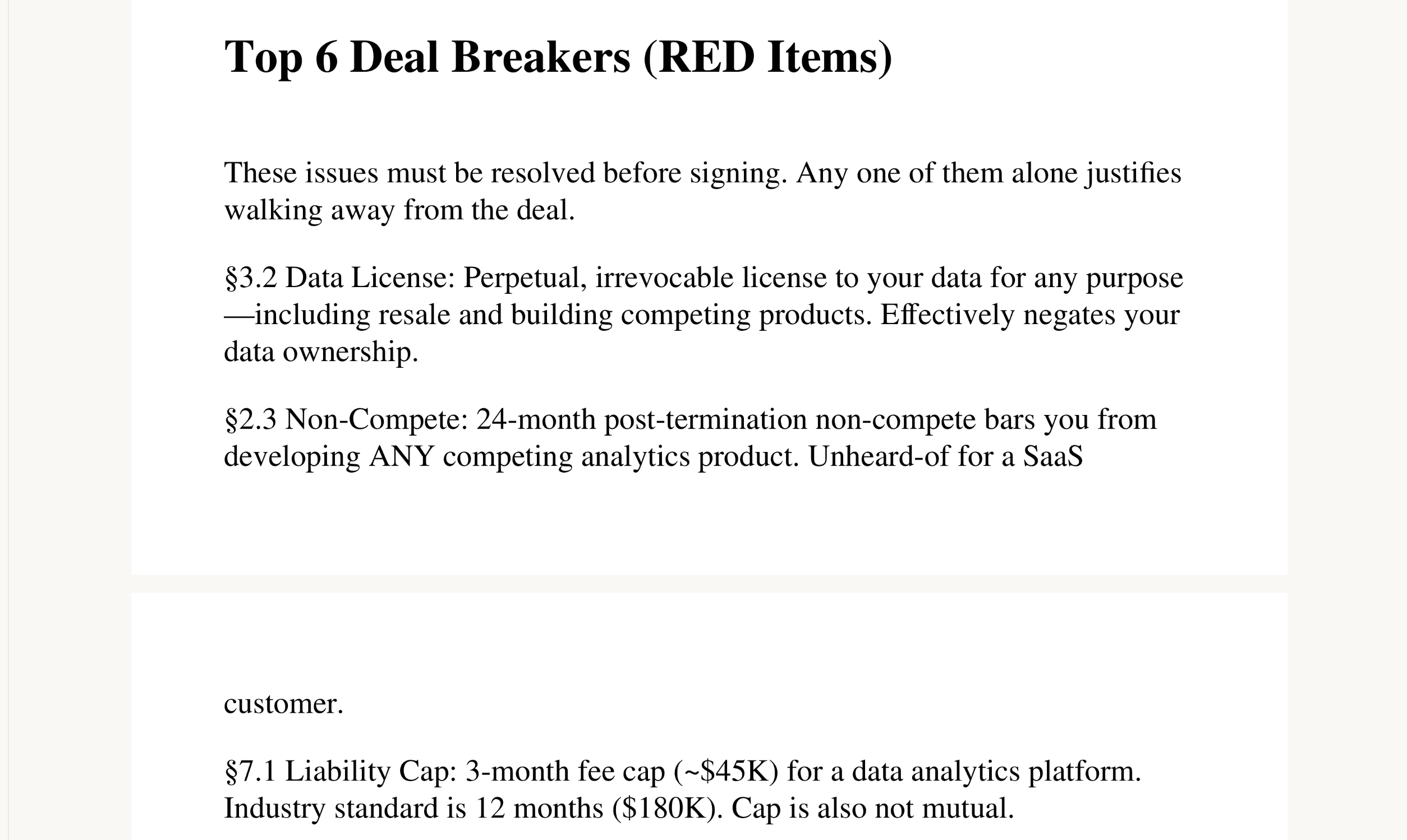
The most critical red flags included a data license clause granting DataVault perpetual, irrevocable rights to use customer data for any purpose including resale and building competing products, a 24‑month post‑termination non‑compete on a SaaS customer (highly unusual and potentially blocking future internal analytics builds or acquisitions), a liability cap at three months of fees (~$45K) when industry standard for a $180K annual deal is 12 months, liability carveouts that only uncap the customer's liability while leaving the vendor capped, zero obligation to return data on termination, and a 60‑day data breach notification window that likely violates GDPR's 72‑hour requirement and most US state laws.
For every flagged issue, Computer drafted specific proposed redline language, assigned a severity color code, provided rationale grounded in market standards and legal risk, and included fallback positions for priority negotiation items.
It also flagged seven missing provisions standard in enterprise SaaS agreements — including a Data Processing Addendum, insurance requirements, security audit rights, service credit SLAs, and dispute resolution terms — and recommended inserting them.
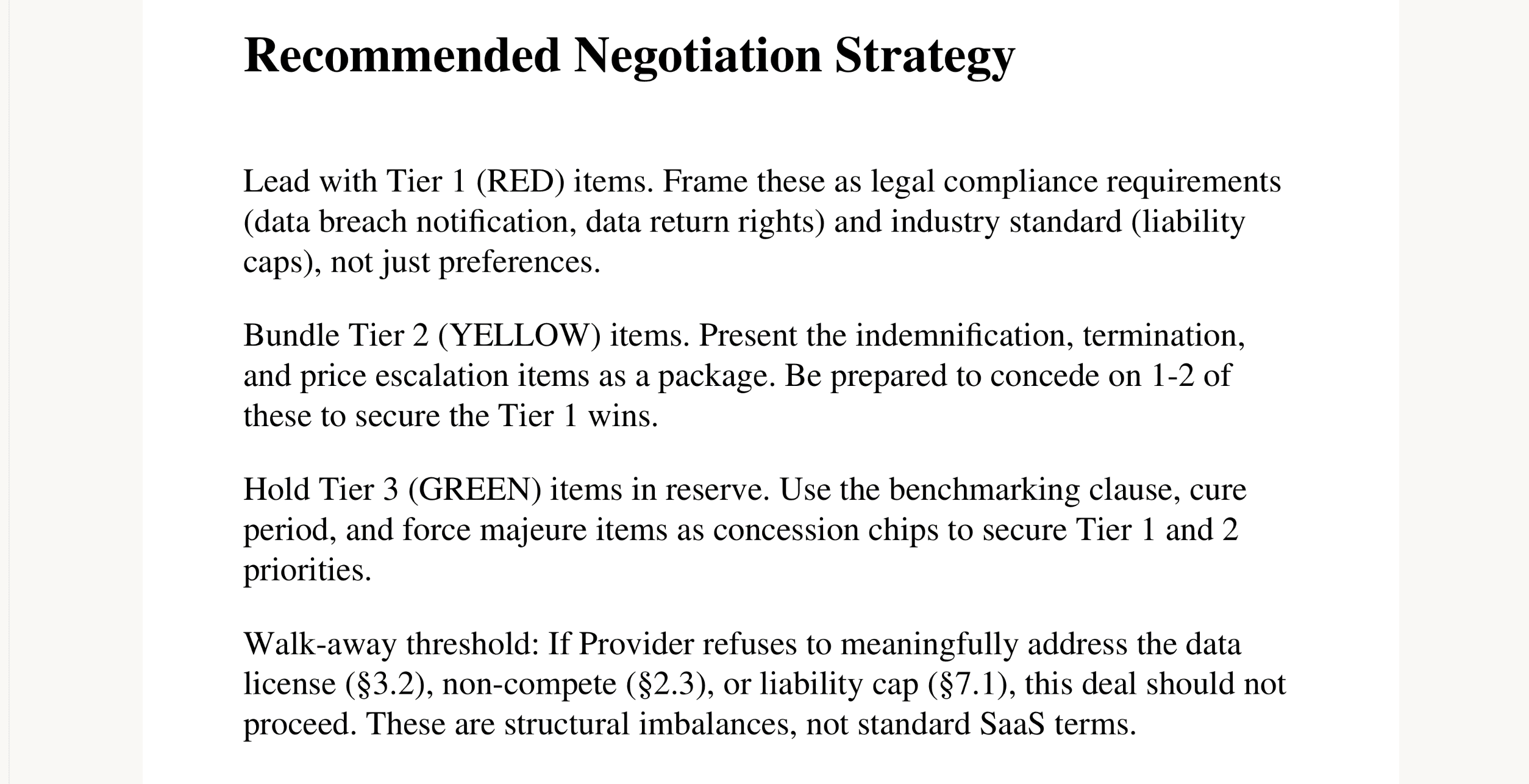
The final Word document included an overall HIGH RISK assessment, a negotiation strategy section advising lead with compliance‑framed red items and bundle yellow items as a package, and a clear recommendation to walk away if DataVault refuses to address the data license, non‑compete, or liability cap issues.
Tips
Anchor in deal size and industry – Give Computer more context, for example: "We're a regulated fintech company in a $300K/year deal; prioritize data residency, audit rights, and higher liability caps over standard SaaS terms."
Set negotiation posture – Clarify how aggressive to be, for example: "We need this vendor but have alternatives; aim for market‑standard terms and flag only egregious overreach as walk‑away issues."
Define output use – Tell Computer who will use the redlines, for example: "Structure the document so our VP Legal can forward the red‑flag summary to the vendor and our procurement team can handle yellow items internally."